Couples in Crisis
is a mini-series exploring the real-life dilemmas that bring people into couples therapy. Each post dives into a common relationship challenge, from infidelity to fertility struggles, communication breakdowns to questions around monogamy, and offers a thoughtful, therapeutic lens on what’s really going on beneath the surface.
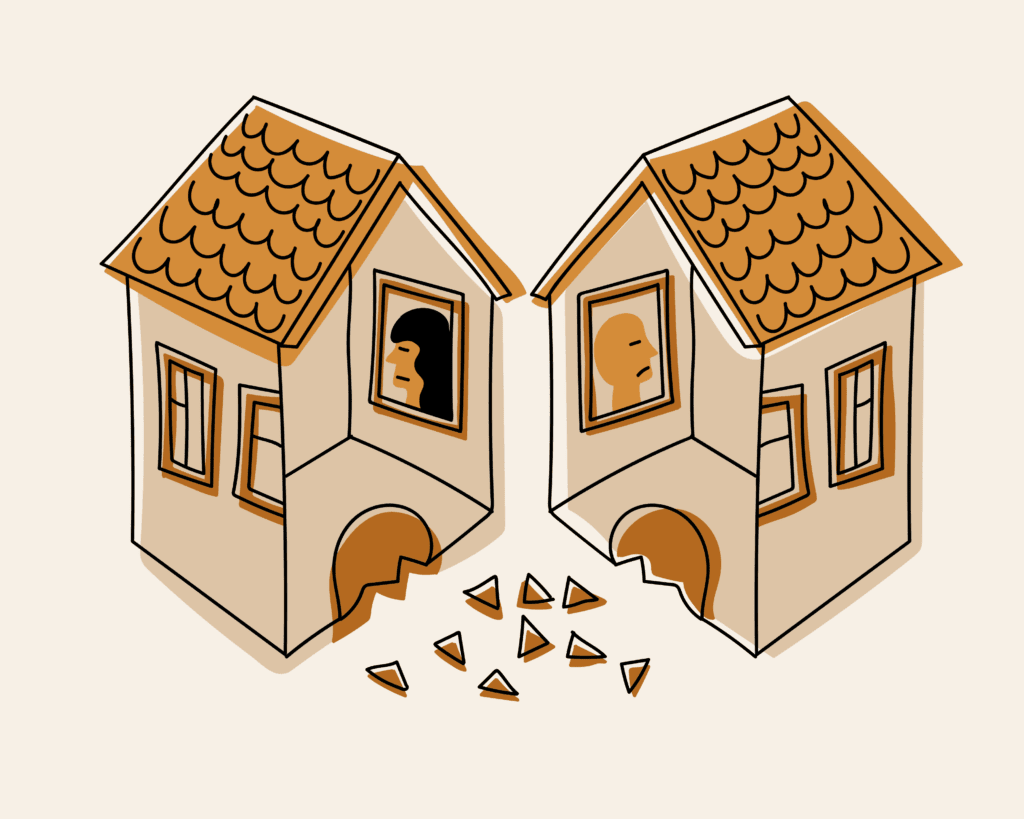
This week, we explore the emotional and practical challenges of separating under the same roof, a situation where couples have decided to end their relationship but are still living together, often due to finances, children, or logistics. Whether you’re in crisis, at a crossroads, or simply curious about how other people navigate separation and co-parenting, you’re warmly invited into the conversation.
Still together, but no longer a couple
When Sophie and Dan came into therapy, they had already decided to separate. “We’re not here to fix it,” Sophie said plainly. “We just need help surviving it.” They were still living in the same house, sharing the same kitchen, and trying to co-parent their two children (Sam, 13, and Isla, seven) while also navigating a tense and sometimes painful mediation process.
“There’s no space to breathe,” Dan added. “We’re civil one minute, then arguing about who left the milk out the next. It’s like walking on eggshells in your own home.”
Sophie and Dan weren’t having shouting matches or slamming doors. Their crisis was quieter, but no less corrosive. It was a slow erosion of goodwill and empathy, worn down by years of unmet needs, emotional misunderstandings, and now the daily strain of trying to disentangle their lives while still sharing a roof and raising their children.
The emotional toll of separating under the same roof
Living together while separating is a reality for many couples, often due to financial pressure, housing constraints, or wanting to provide continuity for the children. But it’s rarely easy. Old dynamics persist. New wounds get opened. And the grief of a relationship ending is made more complicated by the fact that you’re still brushing shoulders in the hallway and sharing the bathroom sink.
For Sophie, this looked like resentment. She was the one who initiated the separation, but also the one now managing the children’s schedules, keeping the household running, and carrying the emotional labour of trying to make it “feel okay” for everyone.
Dan, meanwhile, felt discarded. He hadn’t seen it coming. “One day we were arguing about the dishwasher, and the next she said she wanted out.” He oscillated between withdrawal and protest, at times distant and detached, at other times frustrated and prickly. “She made the decision,” he said in one session. “So why am I the one who feels like a guest in my own home?”
The children, unsurprisingly, were caught in the middle. Sam had become moody and sarcastic, shutting himself in his room for hours. Isla had started waking at night, creeping into Sophie’s bed. “She keeps asking if Daddy’s moving out,” Sophie said tearfully. “And I don’t know what to say. Because I don’t even know myself.”
Navigating co-parenting while living together
Therapy offered Sophie and Dan a place to pause and take stock. Not to rekindle their marriage, but to better understand the patterns that had brought them here, and to shape a more thoughtful way of uncoupling, one that prioritised the emotional wellbeing of their children and themselves.
They explored what their shared values were now, not as romantic partners, but as co-parents. They named their triggers and worked on setting new boundaries. Sophie, for example, needed Dan to take more initiative with the kids without being asked. Dan needed Sophie to keep difficult conversations about finances or logistics out of the children’s earshot.
Importantly, therapy gave space for grief. Ending a relationship, especially one with children, is a loss, even when it’s the right decision. There is sadness, guilt, fear, and often a sense of failure. Sophie and Dan needed to mourn the family they had been, while also imagining the new shape it might take.
A psychoanalytic view: when shared space holds emotional residue
From a psychoanalytic perspective, living together while separating often stirs up unconscious processes linked to dependency, loss, and identity. The home becomes a psychic space as much as a physical one, imbued with projections, defences, and unspoken expectations. When couples remain under one roof but are emotionally uncoupling, the ambiguity can trigger primitive anxieties: fear of abandonment, engulfment, or rejection.
Old attachment wounds often resurface, especially when one partner feels “left” and the other feels burdened by guilt. For Dan and Sophie, their shared home became a site of emotional residue, a place where past hurts lingered and everyday encounters re-ignited unprocessed pain. Therapy helped them name and symbolise this loss, rather than unconsciously act it out through passive-aggressive routines or avoidant withdrawal.
Practical tips for couples living together while separating
If you’re separating under the same roof, here are some ways to support yourself and your family:
- Create clear boundaries. Emotional and physical boundaries reduce confusion. For example, allocate private spaces or alternate responsibilities where possible.
- Name the limbo. Acknowledge that this is a transitional phase. Suppressing it or pretending things are “normal” can increase tension.
- Minimise conflict around the kids. Shield your children from adult disagreements and communicate honestly but age-appropriately with them.
- Don’t aim for perfect co-parenting. Aim for consistency, not perfection. Children benefit most from stability and warmth, not flawless execution.
- Seek support. Therapy, mediation, or even a trusted third party can provide a much-needed space to manage the emotional complexity of this arrangement.
FAQ: Living together while separating
Is it OK to live together while separating?
Yes. Many couples remain under the same roof during separation due to housing or financial needs. With clear boundaries, it can be a workable short-term arrangement.
How do you co-parent while living together and separating?
Focus on structure, open communication, and emotional containment. Maintain routines for the children and agree on consistent messaging.
How can I protect my mental health during this time?
Prioritise personal space, emotional expression (e.g., through therapy or journaling), and mutual respect. Don’t try to go through this alone.
Final thoughts: Separation isn’t failure
Living together while separating is one of the most emotionally demanding phases a couple can experience. But it’s also an opportunity to end a relationship with integrity and care. With compassion, structure, and therapeutic support, couples can model resilience for their children – and begin the next chapter with less reactivity and more clarity.